
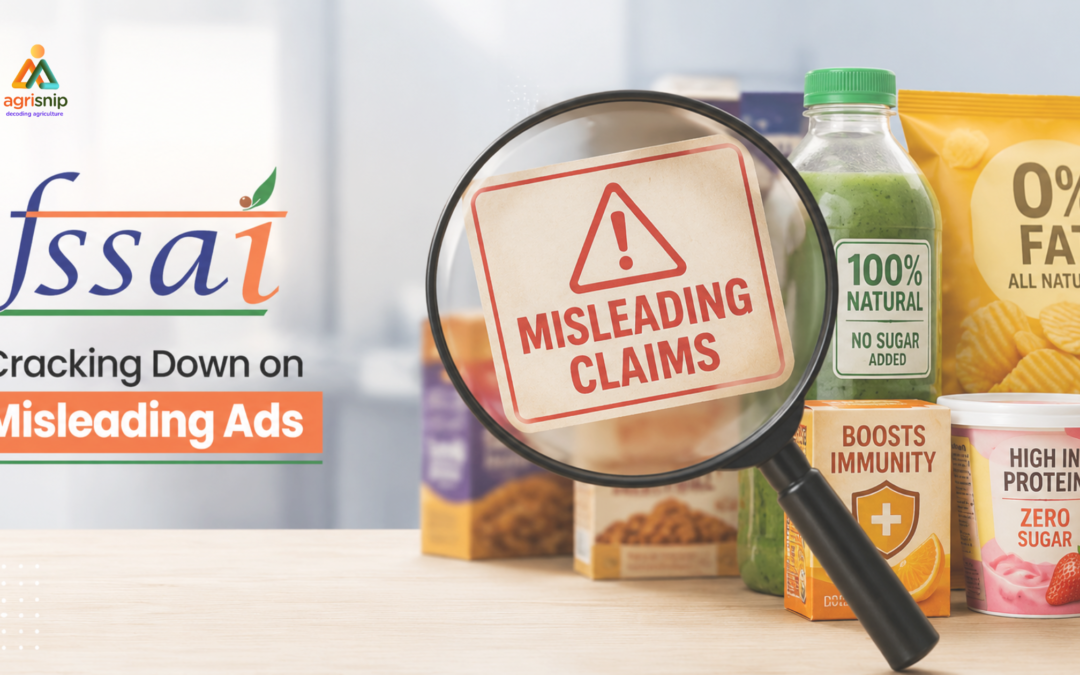
Every day, consumers pick up a packet of biscuits, a bottle of juice or an energy drink based on what the label and advertisement promise. But how much of that information can consumers trust? This question has gained fresh importance after India’s food regulator took action against more than 150 food companies over misleading advertisements, false claims and labelling violations.
FSSAI Issues Over 150 Notices
The Food Safety and Standards Authority of India (FSSAI) has issued more than 150 notices to food and beverage companies in recent months for alleged violations of food laws and regulations. The action covers misleading advertisements, false claims and non-compliance with labelling requirements.
The regulator shared details of the enforcement drive in an update, highlighting several major brands that have come under scrutiny. The move shows that FSSAI is increasingly examining not only food safety but also how products are presented and promoted to consumers.
Major Food and Beverage Brands Under Scrutiny
The companies named by FSSAI include several prominent domestic and multinational brands. The companies facing scrutiny include several major food and beverage brands, such as Nestlé India, PepsiCo, Abbott India, Red Bull India, Danone India, Monster Energy India, Hell Energy, Mondelez India, Coca-Cola India, Diageo, Pernod Ricard, Ferrero India and Kenvue.
The action also extends beyond packaged-food manufacturers. FSSAI said it has taken action against energy drink and alcoholic beverage makers and seized products from several companies over violations.
E-Commerce Platforms Also Face Action
The regulatory action has reached online retail platforms as well. FSSAI said 12 notices were issued to e-commerce companies, including Amazon and Flipkart.
In one significant action, an Amazon warehouse licence was cancelled, according to the regulator. This highlights how food compliance is becoming increasingly important across the entire supply chain, from manufacturers and warehouses to online marketplaces.
For consumers, this matters because food products are increasingly purchased online, making proper storage, licensing and regulatory compliance important beyond the physical retail store.
Restaurants Come Under the Scanner
FSSAI’s enforcement drive also includes the food-service sector. More than 30 notices were issued to establishments including KFC, McDonald’s, Pizza Hut, Domino’s and Costa Coffee.
The regulator further stated that it has suspended five Domino’s licences. FSSAI had also issued notices to several five-star hotels in the previous year, indicating that its scrutiny extends across different categories of food businesses.
Why Misleading Claims Matter to Consumers
Food advertisements and labels strongly influence purchasing decisions. Words and claims suggesting superior quality, nutritional benefits or particular product characteristics can make consumers choose one product over another.
Therefore, inaccurate or unsupported claims can affect consumer choices. FSSAI’s action is aimed at ensuring that companies provide information that complies with food regulations and does not mislead buyers.
This is particularly relevant today because consumers encounter food marketing not only on television and packaging but also through social media, e-commerce platforms and digital advertisements.
Companies Begin Corrective Actions
The regulatory action has already prompted some businesses to make changes. FSSAI said several companies have started taking corrective measures after receiving notices.
This suggests that the notices are not simply punitive measures. They can also push businesses to review their labels, advertising practices, product classifications and other compliance requirements.
For the food industry, the message is clear: regulatory responsibility does not end when a product leaves the manufacturing facility. How a product is labelled, advertised, stored and sold also matters.
What This Means for the Food Industry
The latest action represents a broader shift towards stronger food regulatory oversight in India. Manufacturers, restaurants, warehouses and e-commerce businesses all form part of the food supply chain and therefore have responsibilities under food regulations.
For consumers, stronger enforcement could mean more accurate product information and greater transparency. For businesses, it means that food safety, labelling and advertising compliance must work together.
The FSSAI notices therefore serve as a reminder that a product’s promise to consumers must be backed by regulatory compliance, accurate information and responsible marketing.
Read more latest news abouth the agriculture and the industry here : https://agrisnip.com/agri-news/
Conclusion
FSSAI’s latest action highlights the growing importance of transparency and regulatory compliance in India’s food industry. With more than 150 notices issued, the regulator has made it clear that misleading advertisements, unsupported claims and improper labelling will face closer scrutiny.
For consumers, stricter enforcement can help ensure that the information on food products is accurate and reliable. For companies, the development is a reminder that responsible marketing and compliance are just as important as product quality.
.
