
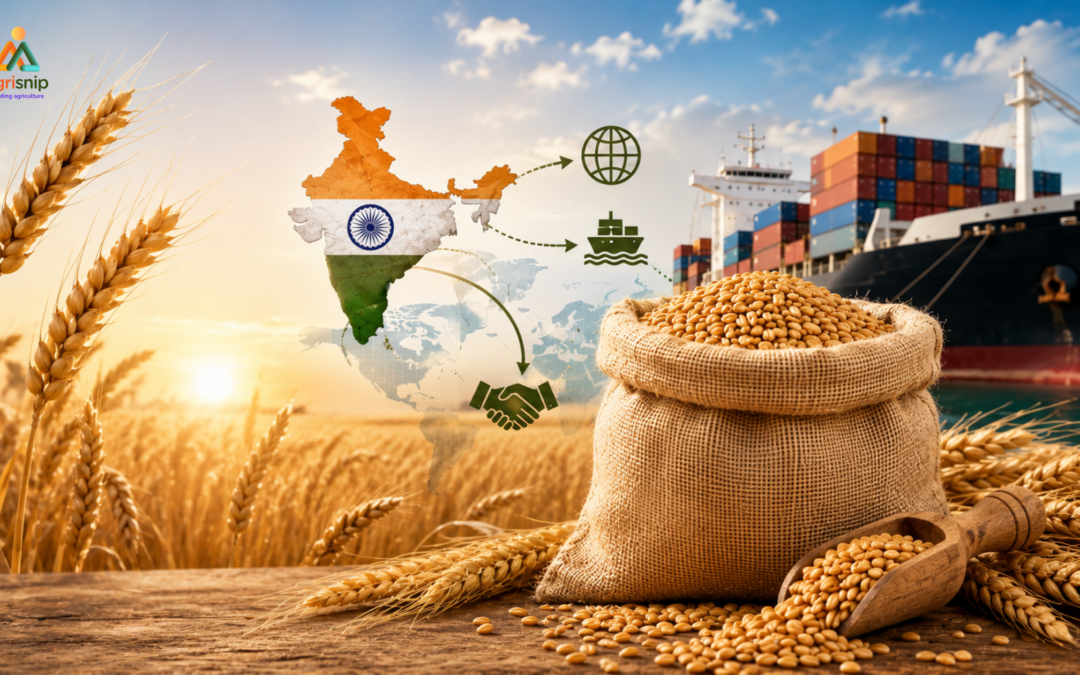
India has made a significant shift in its wheat trade policy by removing restrictions on wheat and wheat-product exports. The move ends a more than four-year export ban and comes at a time when global wheat prices are facing pressure from geopolitical uncertainty and disruptions linked to the Russia-Ukraine conflict.
The decision could open new opportunities for Indian exporters, flour millers and farmers while strengthening India’s position in the international wheat market.
From Export Restrictions to Free Trade
India banned wheat Foreign trade in May 2022 after severe heatwaves affected domestic production and reduced available stocks. At the same time, strong export demand contributed to pressure on domestic supplies and prices. Since then, exports were permitted only under specific conditions, including quantity and port restrictions.
In early 2026, the government partially opened exports, allowing shipments of 5 million tonnes of wheat and 1 million tonnes of wheat products. The latest decision goes further by shifting wheat, atta, maida and rava/suji into the “free” global trade category with immediate effect.
Bangladesh Emerges as a Key Market
One of the biggest factors supporting India’s wheat market trade opportunity is rising demand from Bangladesh. Global wheat supply has been affected by geopolitical tensions, particularly the Russia-Ukraine conflict, increasing the need for alternative suppliers.
According to industry officials cited by ET, demand for Indian wheat from Bangladesh has increased, with export volumes rising consistently over the past month. Trade between the two countries takes place through the land border for this wheat movement rather than seaports, creating an important regional trade route for Indian suppliers.
MSMEs Get a Bigger Opportunity
The policy change could be particularly important for small and medium flour millers. Under the earlier restricted system, exporters faced quantity- and port-specific conditions that made international trade difficult for smaller businesses. Industry representatives said these restrictions largely favoured leading companies that had the capacity to navigate the system.
With exports now moved to the free category, MSMEs can explore overseas markets more easily and potentially take their own flour and wheat-product brands global. This could encourage greater competition, branding and value addition within India’s wheat-processing sector.
What It Means for Farmers and Domestic Prices
For farmers, greater foreign trade access can create an additional demand channel for wheat. If international buyers remain active, exporters and millers may compete more strongly for supplies, potentially supporting farm-gate prices. However, the impact will depend on domestic availability, procurement and global prices.
The Economic Times reported that wholesale wheat prices had increased from around ₹25 per kg in May to approximately ₹28.50 per kg, which industry participants considered normal for the season. The government’s decision therefore reflects greater confidence that domestic stocks are sufficient to support food-security requirements while allowing exports.
Read more agriculture news here ; https://agrisnip.com/agri-news/
Conclusion
India’s wheat global trade policy shift is more than a trade announcement—it signals a changing approach to balancing food security with global market opportunities.
With restrictions removed, Indian exporters and MSMEs can access international buyers more freely, while Bangladesh could become an important destination for Indian wheat.
If global demand remains strong and domestic supplies stay comfortable, the policy could benefit the broader wheat value chain. For India, the challenge now will be maintaining the right balance between market growth, farmer returns and domestic food security.
