
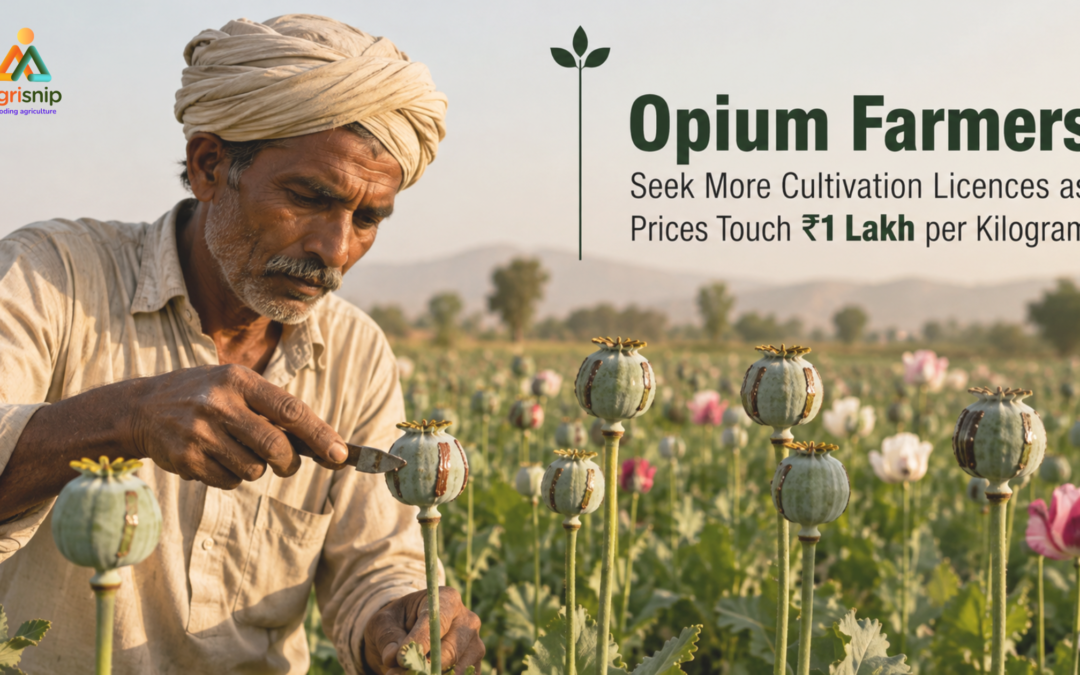
Imagine growing a crop so valuable that a single kilogram could earn nearly ₹1 lakh. For many licensed opium farmers in India, this is no longer a distant dream but a daily reality. As prices climb, thousands of cultivators are now demanding more licences to expand legal opium cultivation.
Farmers Push for Wider Access to Licensed Cultivation
Opium cultivation in India is once again drawing attention as farmers seek an expansion in the number of licences issued for the crop. The demand comes amid reports of strong market value, with opium fetching around ₹1 lakh per kilogram in the context highlighted by the recent discussion. Farmers argue that more cultivators should be allowed to participate in the regulated system, particularly in areas with a long history of poppy cultivation.
However, opium cultivation in India is not an ordinary agricultural activity. It is permitted only under a licence issued by the Central Bureau of Narcotics (CBN), and cultivation is restricted to notified areas of Madhya Pradesh, Rajasthan and Uttar Pradesh. The government also exercises control over procurement, with licensed farmers required to tender their produce to the authorities.
The farmers’ demand therefore involves both economic opportunity and regulatory policy. They want the licensing framework to accommodate more eligible growers while ensuring that existing cultivators receive adequate returns for their efforts. Rising input costs and the economic importance of the crop have added urgency to the issue. The debate also comes as India continues to balance farmer interests with strict controls over narcotic substances.
Why Opium Cultivation Remains Tightly Regulated
India has a distinctive position in the global opium sector because it permits controlled cultivation for legitimate medical and scientific purposes. Under the Narcotic Drugs and Psychotropic Substances framework, poppy cultivation is prohibited unless specifically authorised through a government licence.
The CBN supervises cultivation, monitors fields and regulates the movement and procurement of the crop. Licences are issued annually for specific crop years, and farmers must comply with conditions relating to cultivation area and production.The regulatory structure is designed to prevent diversion of opium into illicit channels while maintaining supplies for pharmaceutical requirements.
The Union government has stated that it exercises exclusive control over cultivation and purchases the entire produce for processing and sale for medicinal and scientific purposes. Government opium factories, including facilities at Ghazipur and Neemuch, process the collected produce.
This framework means that increasing licences is not simply a matter of responding to market prices. Any expansion has to consider monitoring capacity, production requirements, farmer eligibility and safeguards against diversion.
Demand Reflects the Economic Pressure on Farmers
For farmers, the issue is closely linked to income and access to a regulated high-value crop. A limited licensing system means that many growers who may have agricultural experience in poppy cultivation cannot automatically enter the sector. Existing farmers also operate under production conditions that can affect their eligibility for future licences.
Reports and policy discussions around opium cultivation have highlighted concerns over stagnant procurement returns, rising cultivation costs and changes in the production system. These factors have contributed to demands for greater transparency and a closer examination of the licensing framework.
At the same time, the government must ensure that any expansion does not weaken regulatory oversight. Opium is a controlled narcotic substance, making traceability and supervision essential from cultivation through procurement and processing.
Balancing Farmer Interests With National Regulation
The demand for more licences presents a policy challenge. Farmers want greater participation and stronger economic returns, while authorities have to maintain strict control over a crop with significant public-health and security implications. Any policy revision would therefore need to balance farmer livelihoods with pharmaceutical demand and international obligations.
The CBN’s existing system includes field measurement, licensing conditions and government procurement, providing a framework for controlled production.
Read more latest news regarding agriculture and the business here : https://agrisnip.com/agri-news/
Conclusion
The call for more opium cultivation licences highlights a wider agricultural policy question: how can farmers benefit from a valuable crop while maintaining strict regulatory safeguards? As growers seek greater access and better economic opportunities, the government will have to weigh these demands against medicinal requirements, monitoring capacity and the need to prevent diversion.
A transparent licensing framework, clear eligibility criteria and regular consultation with farmers could help address concerns without compromising India’s tightly controlled legal opium system.
