

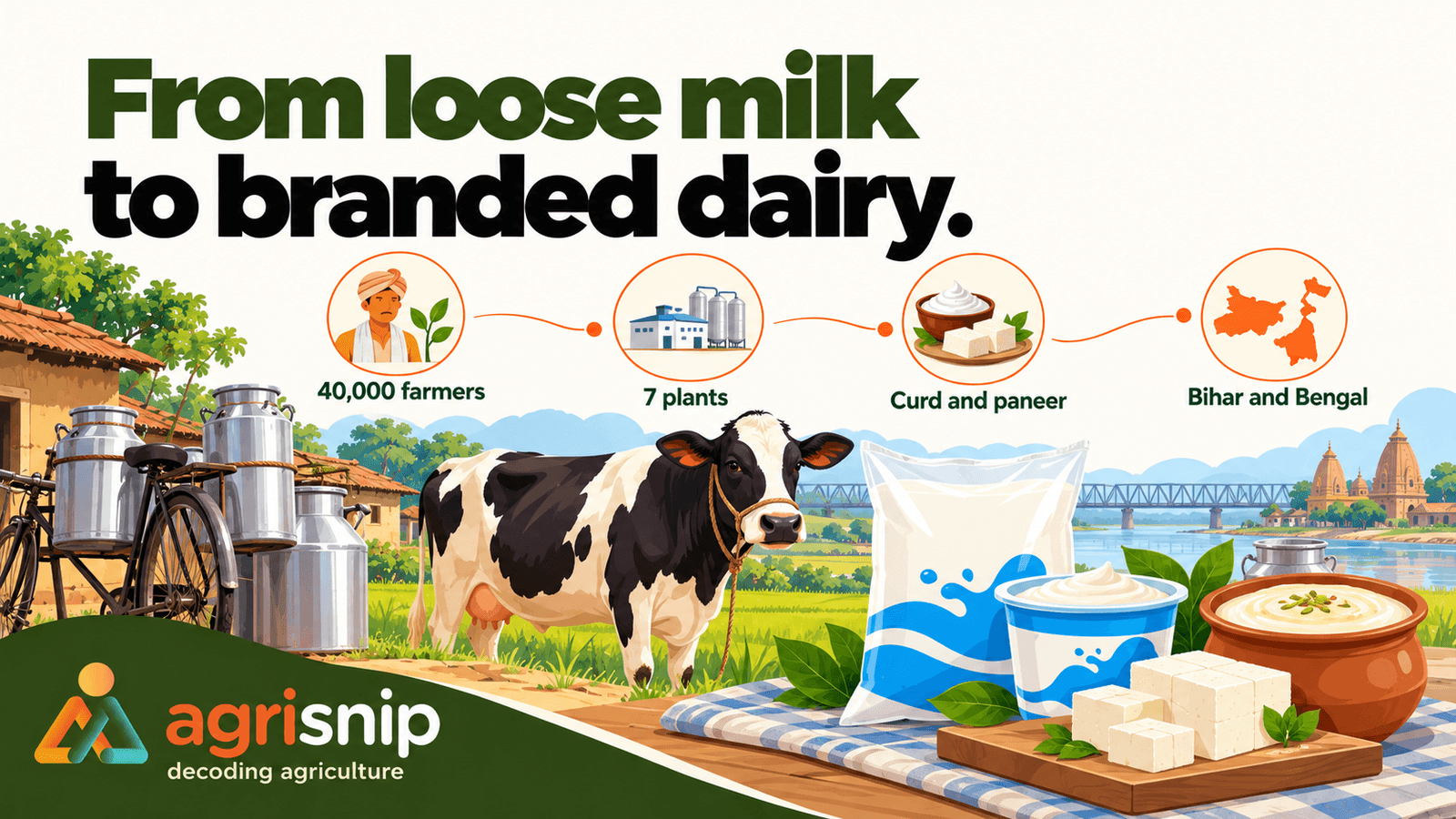
Walk into a Bihar market, and most of the milk you see is loose. According to ITC, over 80% of consumers in the state still buy it that way, from a local vendor, in a steel can. The company sees that as the opening it has been waiting for.
ITC, best known for Aashirvaad atta, says eastern India will remain a key focus for its dairy plans. It sells milk, curd, paneer, lassi and Mishti Doi under the Aashirvaad name in Bihar, West Bengal and Jharkhand, and says dairy is among its fastest-growing categories. This explainer covers what the company has said, what it has left out, and what the push could mean for the farmers who supply the milk.
What ITC Has Said
ITC entered fresh dairy in 2018 with Aashirvaad milk in Bihar, then moved into West Bengal and Jharkhand. It describes itself as the second-largest dairy company in Bihar. That is the company's own claim, and no market share figure was given.
Hemant Malik, who heads ITC's Foods Division, told PTI that the east is "one of the most promising growth markets for the dairy category" and will be central to growth in the coming years. He called dairy a category seeing "high double-digit growth". The annual report adds that the Aashirvaad Svasti fresh dairy range grew strongly in 2025-26, helped by a premium milk variant called Select and by curd, paneer, Mishti Doi and lassi.
The company has not disclosed dairy revenue, plant capacity or investment amounts, so there is no way to size the business from these reports.
Where the Milk Gets Processed
ITC runs seven dairy-processing facilities: Munger, Patna, Muzaffarpur and Gaya in Bihar, Ranchi in Jharkhand, and Howrah and Bardhaman in West Bengal. The company says it is still widening its distribution network to reach more shops.
The spread of plants suggests a plan to collect and sell milk close to home. Dairy is a short-shelf-life business, and long hauls cost money and quality.
The Real Target: Loose Milk Drinkers
Selling milk in a pouch to a household that buys from the neighbourhood vendor is not easy. Malik argued that the 80% loose-milk figure is a "compelling opportunity" to move families to branded dairy with assured quality, safety and consistency.
Curd is the example he gave. South India, he noted, moved to branded curd over a decade ago, and ITC wants Bihar to follow through with its pouch curd. In sweets and desserts, the company is testing healthier options beyond Mishti Doi, but has not named any product.
Why value-added products? A litre of milk sold as a pouch earns a thin margin. The same milk turned into paneer, curd or a dessert earns more. That logic is ours, not ITC's, but it fits the company's emphasis on value-added items.
Project Gomukh: The Farmer Side
ITC's farmer programme is called Project Gomukh. The company says it works with over 40,000 dairy farmers and buys milk straight from them. Its stated aims are higher milk productivity, better quality and more income for rural families.
In the latest year, it says, it supported about 33,300 farmers in more than 560 villages across the three states. The support listed includes veterinary services, cattle feed distribution, deworming and mastitis control.
Those services are useful. They also raise the quality and volume of milk a processor can buy. The programme is the supply side of a branded dairy business.
What It Means for Dairy Farmers
For a farmer in Bihar, Bengal or Jharkhand, a large buyer with seven plants brings a few real benefits: a regular buyer and veterinary support. A farmer near ITC's collection network gets an alternative to the local vendor or the cooperative.
There are open questions too. ITC has not published the price it pays farmers, how that price is set, how often it pays, or how its rates compare with local cooperatives and private dairies. The 40,000-farmer figure counts members of the programme, not necessarily daily suppliers. And 33,300 farmers received support in the past year, which is fewer than the full programme.
The honest advice is simple. Compare offers, ask for the rate card in writing, and keep records of fat and SNF readings on each delivery.
Why the Paneer Rule Matters Here
ITC sells paneer, and the national debate over what may be called paneer is relevant. FSSAI's draft rule, which would reserve the name for milk-made products, favours dairies that make paneer from milk. For a company that sources milk from farmers and advertises quality, a stricter definition could help its brand. ITC has said nothing on the draft, so this is an observation, not a statement from the company.
What Farmers and Local Dairies Can Do
If you supply a cooperative or a private dairy, ask what price premium goes with higher fat and lower bacterial count, and test your own milk before you quote. If you sell loose milk, look at what the packaged brands offer your customers: hygiene, steady supply and clear labels. Farmers' groups can ask the programme for service details, such as the cost of feed and whether veterinary visits are free.
Small dairies and sweet makers will feel the pressure too. Branded curd and Mishti Doi compete directly with local products. Sharper packaging and consistent quality will matter.
Questions Readers Ask
Where does ITC sell dairy products? Bihar, West Bengal and Jharkhand, under the Aashirvaad brand.
How many farmers supply ITC? The company says Project Gomukh works with over 40,000 dairy farmers.
Does ITC say what it pays farmers? No. The price and payment terms have not been published.
Is ITC the biggest dairy player in Bihar? ITC says it is the second-largest. No market share was given.
Conclusion
ITC is betting that households used to loose milk will pay for the assurance of a sealed pack. Whether that works depends on price, trust and the experience of the farmers who fill the pouches. Three markers will show how it goes: ITC's next annual report, for dairy growth numbers; the price rates farmers actually receive this winter; and how local dairies respond with their own branded lines.