
- 🆕 New
Project report
Honey beverage plant project report 4000 bottles day with excel model
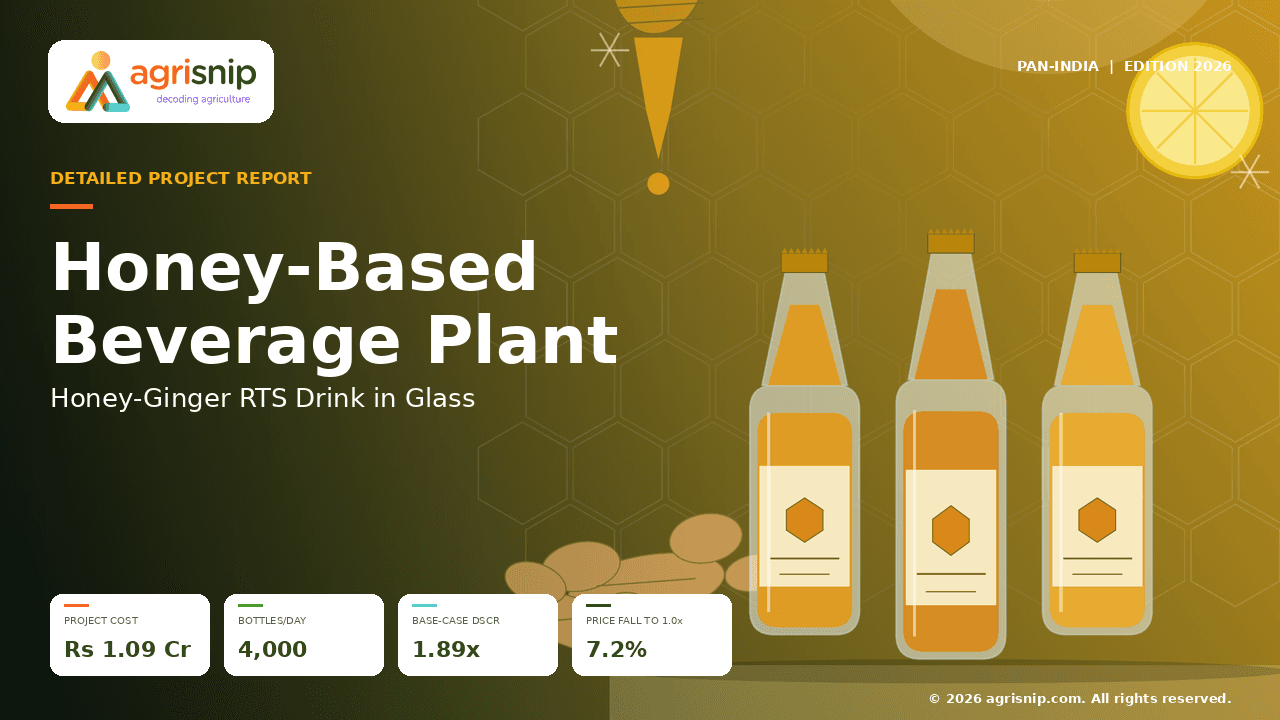
A 29-page project report for a honey-ginger drink plant filling 4,000 bottles of 200 mL a day: about ₹1.09 crore project cost, a right-sizing test, 14 stress scenarios and a live Excel model you can edit.
Buy now · ₹799🍯 In a honey drink, the glass costs more than the honey. This report shows the real numbers, and the right size to start small.
📊 The numbers at a glance
- 🏭 Capacity: 0.8 kilolitres a day, which is 4,000 bottles of 200 mL of honey-ginger drink
- 💰 Project cost: about ₹1.09 crore, with the start-up reserve included
- 📦 Packaging: glass, caps, labels and cartons cost about ₹47 a litre, against ₹17 for honey, sugar and flavour
- ⚠️ Stress limit: a fall of about 7% in selling prices takes average DSCR to 1.0x
🧭 An honest reading
The plan passes the bank test on average (average DSCR 1.89x, IRR 15.5%), but Years 1 and 2 are loss-making and the promoter funds the start-up losses. Price and volume matter far more than the honey price. The report shows this plainly, along with the right-sizing test, so you know exactly what a lender will test before you apply.
🎯 Who this report is for
- ✅ Entrepreneurs planning a honey-based or ready-to-serve drink brand
- ✅ Beekeepers, honey processors and FPOs adding a value-added product
- ✅ Cafe, bakery and food businesses that want their own bottled drink
- ✅ Consultants and bankers who need a clean, honest model
📦 What you get
- 📄 The full project report (PDF): market and buyer plan, plant design, project cost, 7-year financial projections, sensitivity tests and a licence checklist
- 📊 A live Excel financial model: change prices, volumes and costs and watch the results update
- ⬇️ Download straight after payment: keep access for the period shown on the page
🏦 Built for the bank manager's questions
Lenders ask the same four things every time: how much does it cost, who will buy, can the business repay, and what if prices move? This report answers all four with a project cost and funding plan, a buyer plan, DSCR across seven years, and sensitivity tests that show how the numbers hold when prices or volumes change.
🔎 What is inside
- 📌 Market data, honey and bottle price points, and a channel plan: general trade, cafes, hotels, gifting and online
- 📌 Formulation and packaging cost per litre, built from current trade prices
- 📌 Process flow, machinery list and a honey quality-control plan
- 📌 Project cost, means of finance and 7-year projections with DSCR and IRR
- 📌 14 sensitivity scenarios and the right-sizing test (0.4 to 0.8 kL a day)
- 📌 FSSAI, GST, Legal Metrology and scheme notes, with the points still to verify
💡 Why buyers choose this report
- ⭐ Puts back the glass bottle cost that the reference report left out
- ⭐ Shows why the reference size of 2,000 bottles a day fails the bank test
- ⭐ Tells you the break-even and the price limit before you borrow, not after
- ⭐ Make it your own: the Excel model is editable, so you can test your own prices, volumes and location
- ⭐ Clear writing: no jargon walls, ready to share with your banker, partner or investor
🚀 Ready to start? Press Buy now, pay online, and download the PDF report and the Excel model.
❓ Questions you may have
Why 4,000 bottles a day? Because the right-sizing test shows smaller plants (2,000, 3,000 and 3,500 bottles a day) do not reach a 1.5x average DSCR on these assumptions. You can still change volumes in the Excel model.
Does it cover honey quality? Yes. It includes a testing plan for honey moisture and purity, because adulterated honey can end a brand. Use an accredited lab for your own lots.
Are the licence rules confirmed? The report lists FSSAI, GST, pack-size and scheme points and marks the ones you must verify. Check current rules with an FSSAI consultant and a CA before you order bottles or labels.
Can I change the numbers? Yes. The Excel model is editable: change prices, volumes and costs and the results update.
Will a bank accept this? The report follows the structure lenders ask for: cost, means of finance, projections, DSCR and sensitivity tests. Every bank has its own format, so check yours; the editable model makes it easy to adjust.